
One call to a local contractor
One call connects you with a contractor who serves your area and handles fire damage cleanup. You can discuss the condition of the property directly with the person responsible for proposing the work.
Serving Austin, Texas & surrounding areas
Calls answered around the clock
This site connects homeowners with local contractors.
Fire damage cleanup · Austin, Texas
One call connects you with a local contractor who handles fire damage cleanup and can discuss the work your home needs.
CALL NOW: +1 877 290 0427This site connects homeowners with local contractors. Independent contractors assess and perform the work.
Understanding cleanup
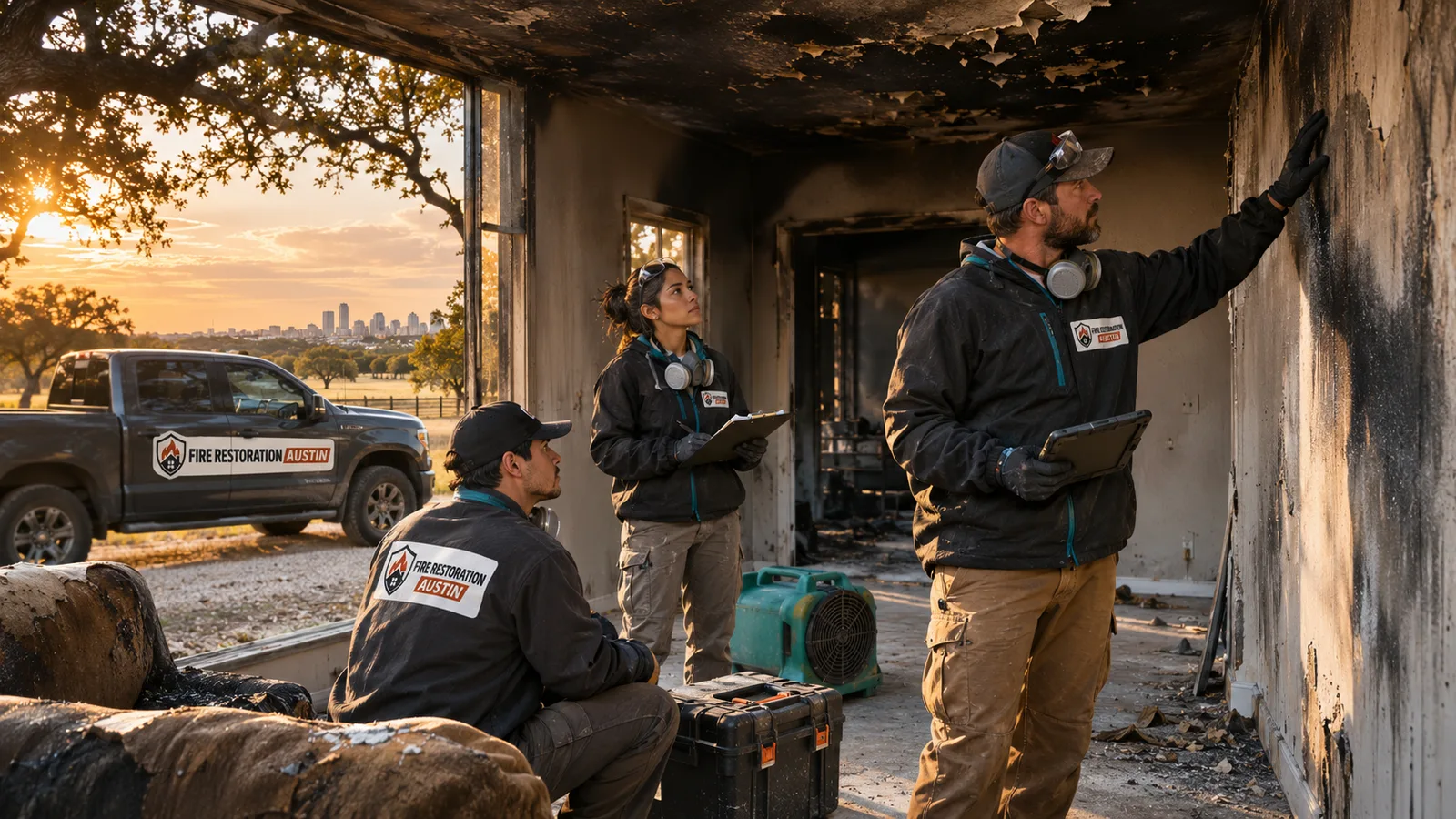
Fire damage cleanup cost in Austin depends on the materials burned, where smoke traveled, how much water remains, and which building materials can be cleaned rather than removed. A small visible burn area can leave residue in adjoining rooms, inside cabinets, and along ventilation pathways. Square footage alone does not establish the scope.
The first assessment should separate heat damage, smoke residue, firefighting water, and damage to belongings. Each requires different work. Charred framing needs a different evaluation than soot on painted drywall. Wet insulation may require removal even where flames never reached it. Ask the contractor to explain what can be restored, what needs replacement, and what remains uncertain until concealed areas are opened.
Smoke residue also affects the cleaning method. Dry, powdery soot can spread if rubbed with a wet cloth. Sticky residue from burned synthetic materials may require different cleaning chemistry and controlled removal. Odor treatment should follow removal of the residue and damaged materials that hold the odor. Fragrance alone does not address the source.
Fire Restoration Austin connects homeowners with local fire damage companies around Austin, TX so they can discuss cleanup directly with a contractor. You get the quote from the contractor and decide whether to proceed.
Local building conditions matter when repairs follow cleanup. In Austin's older neighborhoods, including Hyde Park, original plaster, wood trim, and later alterations can complicate decisions about removal and restoration. Within Austin city limits, structural rebuilding or changes to electrical and mechanical systems may require City of Austin permits. Ask the contractor to identify those requirements separately from surface cleaning.
One call connects you with a contractor who serves your area and handles fire damage cleanup. You can discuss the condition of the property directly with the person responsible for proposing the work.
A useful scope distinguishes soot removal, drying, contents handling, and odor treatment from drywall replacement, painting, and structural repairs. That separation makes differences between written quotes easier to understand.
Smoke residue can affect porous materials, unfinished wood, textiles, and enclosed cavities differently. Ask which surfaces are included, which cleaning methods are proposed, and how the contractor will judge whether cleaning has worked.
You talk with the contractor directly about access, the proposed scope, and payment terms. The contractor provides the quote. You decide whether the proposed work fits the property's condition and your next steps.
Call, enter your ZIP code, and you are connected directly with a local contractor who serves that ZIP. Talk with the contractor about arranging an assessment and whether the property is safe to access. Follow fire department restrictions before entering a damaged building.
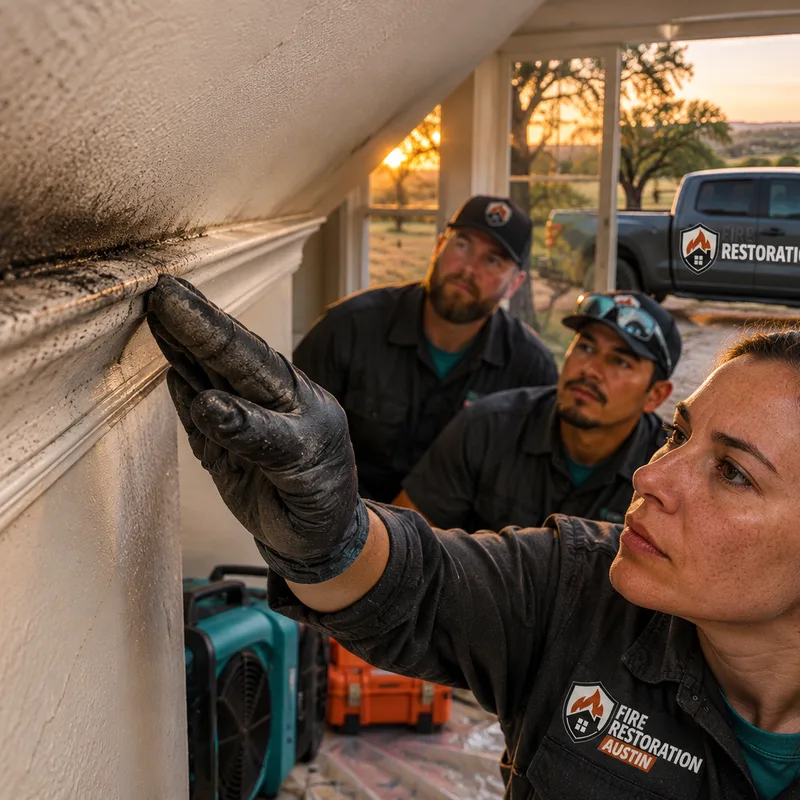
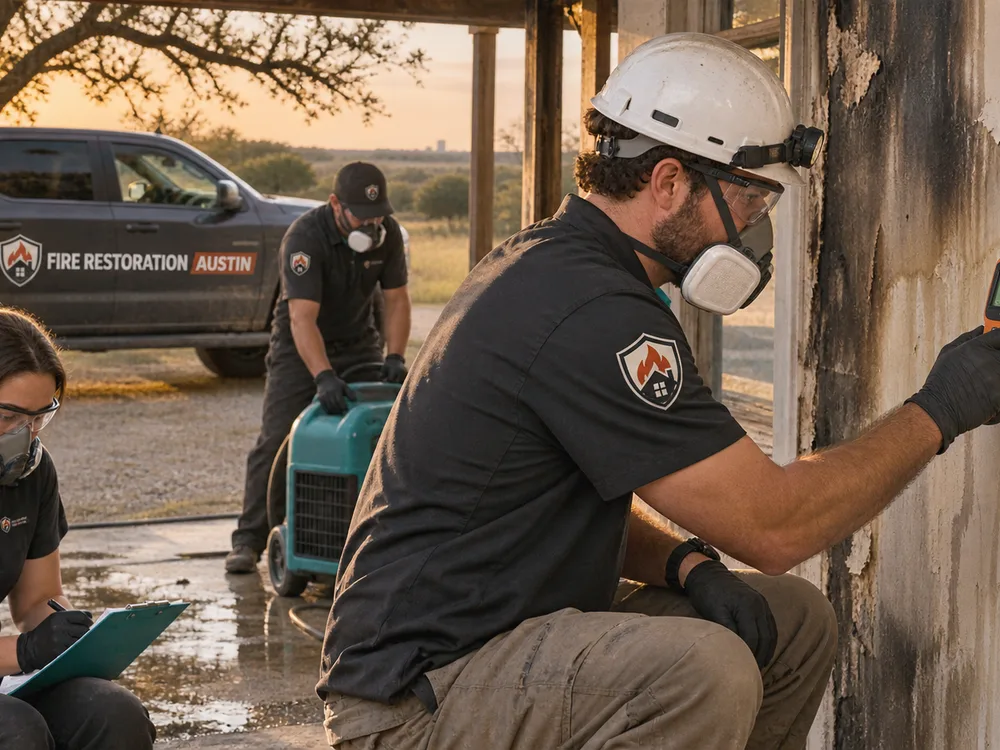
The contractor assesses affected rooms, residue patterns, moisture, and materials exposed to heat. Smoke movement can extend the cleaning area beyond the burned room. Moisture readings help identify wet building materials that may look dry at the surface.
Ask for the proposed work to distinguish building cleanup, contents handling, demolition, drying, odor treatment, and repairs. The scope should identify exclusions and explain how concealed damage or changes in material condition will be documented and authorized.
Depending on the damage, the work may involve isolating affected areas, removing debris, extracting water, drying materials, and cleaning salvageable surfaces. HEPA-filtered equipment may be used to capture fine particles. Odor treatment follows source removal and cleaning rather than replacing those tasks.
Before agreeing that cleanup is complete, review the treated areas and any remaining odor or moisture concerns with the contractor. Confirm which repairs are still needed and whether another trade must evaluate electrical equipment, HVAC components, or structural damage before those systems return to use.
A stain on the ceiling tells only part of the story. One call connects you with a local contractor who can discuss soot, moisture, odor, and the work needed before repairs begin.
Compare the included work and assumptions before comparing the quote totals. Check whether each contractor includes debris disposal, protection of unaffected rooms, contents handling, permit responsibilities, and finish repairs. Ask how allowances and concealed damage will be handled. Two proposals can cover different amounts of work even when they describe the same damaged room.
A useful written quote identifies the affected areas, proposed methods, materials to be removed, exclusions, and payment terms. Ask whether quantities are based on an inspection and which conditions could change the scope. For Austin properties requiring rebuilding permits, clarify who will handle applications and inspections before repair work starts.
HVAC work should depend on evidence of contamination and an assessment of the affected equipment. Ask whether the system was operating during the fire and whether residue is present at returns, filters, or accessible components. The contractor should explain whether an HVAC specialist needs to evaluate the system before it is operated.
Belongings should be evaluated by material, exposure, and condition. Upholstery, electronics, photographs, and solid wood furniture need different handling decisions. Ask for an inventory before items leave the property and clarify responsibility for packing, transport, storage, and disposal authorization. Keep records of items proposed for removal.
The contractor proposes the work, while the insurer determines coverage under the policy. Ask the contractor how photographs, moisture findings, and changes in scope will be documented for your claim. Confirm coverage questions with the insurer and understand your payment obligations before authorizing work.
Paint disturbance in a pre-1978 home can require lead-safe work practices under applicable rules. Older building materials may also warrant an asbestos evaluation before demolition. Ask the contractor how suspected hazardous materials will be assessed and how any necessary testing or specialist work affects the proposed scope.
One call connects you with a local fire damage contractor serving your area. Talk directly about the affected rooms, cleaning options, and how the contractor develops a written scope. You decide what happens next.
CALL NOW: +1 877 290 0427