
Safe access comes first
Follow the fire department's entry restrictions. Permission to collect belongings is different from permission to live in the home. Structural or electrical concerns may require further assessment before work begins.
Serving Austin, Texas & surrounding areas
Calls answered around the clock
This site connects homeowners with local contractors.
After a house fire · Austin, Texas
One call connects you with a local contractor who handles fire damage cleanup and repairs, so you can discuss the next steps directly.
CALL NOW: +1 877 290 0427This site connects homeowners with local contractors. Independent contractors assess and perform the work.
Safety after a house fire
If you are deciding what to do after a house fire, start with people, shelter, and permission to enter. Stay outside until fire officials say entry is permitted, and follow any restrictions they give you. A fire being extinguished does not mean the building is safe to occupy. Damaged framing, electrical wiring, trapped heat, and contaminated debris can remain hazardous.
Seek medical attention for smoke exposure, breathing trouble, burns, or symptoms that develop afterward. Keep children and pets away from the property. If flames, renewed smoke, or an immediate threat appears, contact emergency services rather than entering to investigate.
Once everyone is safe, contact your insurance company and arrange a safe place to stay. Save receipts for lodging, meals, transportation, and essential purchases. Ask your insurer which additional living expenses your policy covers and how to submit them.
When you are ready to discuss securing the building and planning cleanup, we connect callers with local fire damage contractors throughout Austin, TX who handle that work. You speak with the contractor directly about access restrictions, the affected rooms, and the next steps, then decide whether to proceed.
Follow the fire department's entry restrictions. Permission to collect belongings is different from permission to live in the home. Structural or electrical concerns may require further assessment before work begins.
Photograph damage before items are moved, when access is permitted. Keep a written inventory and retain damaged belongings until your insurer explains what can be discarded. Safety directions take priority over documentation.
Board-up, temporary roof protection, and water removal address immediate exposure. Demolition, odor treatment, and reconstruction need their own written scope. Ask the contractor to distinguish each part of the work.
One call connects you with a local contractor rather than starting another list of numbers to try. You discuss the work directly, receive the contractor's quote, and decide what to authorize.
Ask the responding fire department what access is allowed and whether further building evaluation is needed. Do not restore gas or electricity yourself. If Austin Energy supplies your electricity, contact it about service status and reconnection requirements. Contact the gas provider identified on your account for gas-related instructions.
Record your claim number and the adjuster's contact information. Ask what documentation is required, how temporary protection should be authorized, and whether the adjuster needs to inspect before materials are removed. Keep a dated log of conversations, approvals, and purchases.
When entry is allowed, take wide photographs of each affected room, followed by close-ups of damaged surfaces and belongings. Record soot in rooms away from the flames and water left by firefighting. List each item's description, approximate purchase date, and supporting receipts or older photographs when available. Store copies outside the damaged property.
A contractor should assess openings, standing water, wet materials, soot distribution, and affected building systems before proposing work. Ask which tasks protect the property, which remove damaged materials, and which restore finishes. Discuss contents storage and access arrangements before belongings leave the home.
For a property within Austin city limits, check repair permit requirements with City of Austin Development Services. The required approvals depend on the work, especially when electrical, plumbing, mechanical, or structural repairs are involved. Confirm who will obtain permits and arrange inspections before reconstruction begins.
Once safe access is established, one call connects you with a local fire damage contractor serving your area. Talk directly about securing the property, documenting the scope, and deciding what work comes next.
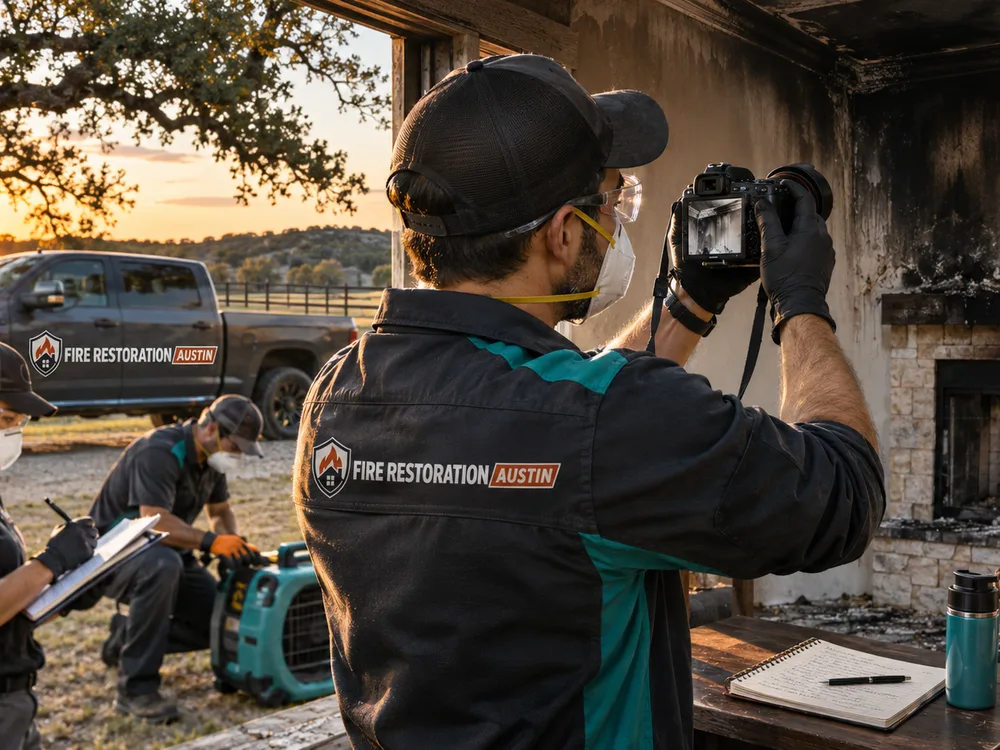
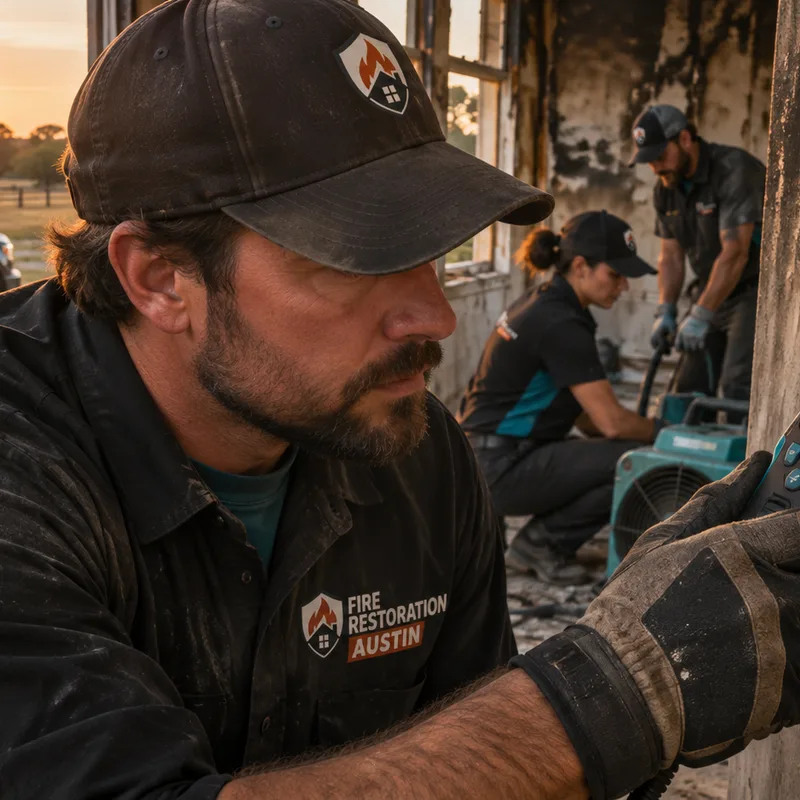
Return only within the access and occupancy limits set by the relevant authorities. Permission to enter briefly does not establish that the home is suitable for overnight occupancy. Ask whether structural evaluation, utility clearance, or building inspections are still needed. A contractor's cleanup schedule does not replace those safety decisions.
Ask for a written scope that separates property protection, cleanup, contents handling, and reconstruction. Have the contractor explain exclusions, payment terms, change approvals, subcontracted work, and responsibility for permits. Ask how progress will be documented and how completion will be assessed. Read any authorization involving insurance proceeds carefully before deciding.
The decision depends on the material, heat exposure, contamination, and whether cleaning can restore safe use. Porous upholstery and insulation need different evaluation than glass or metal. Food, medicines, cosmetics, and children's items warrant particular caution. Ask for an itemized salvage assessment, and coordinate disposal documentation with your insurer.
Painting alone does not remove soot or the source of smoke odor. The contractor should determine which materials need cleaning, removal, or treatment before coatings are considered. Ask whether hidden cavities and the heating and cooling system need assessment. Avoid running affected HVAC equipment until its condition has been evaluated.
The American Red Cross can help people affected by home fires with immediate recovery needs, subject to individual circumstances and available assistance. Ask responding Austin Fire Department personnel how to reach disaster assistance. Texas 211 can also help identify local shelter, food, and other support resources. Keep temporary housing needs separate from decisions about the repair contract.
Testing may be needed when demolition could disturb asbestos-containing materials or lead-based paint. Building age and the materials involved guide that decision, but appearance alone cannot establish whether a material contains asbestos. Ask the contractor how suspected hazardous materials will be assessed before cutting, sanding, or removal.
Call the number provided, enter your ZIP code, and you are connected directly with a local contractor who serves that ZIP. You talk with the contractor directly about the work and decide what happens next.
Fire Restoration Austin connects you with a local contractor who handles fire damage cleanup and repairs. One call puts you in direct conversation about protecting the property and planning the work. The contractor provides the quote, and you decide whether to proceed.
CALL NOW: +1 877 290 0427