
One call to a local contractor
Connect with a contractor who handles fire damage restoration and serves your area. Start with a conversation about assessment, cleanup, and the repairs the property may need.
Serving Austin, Texas & surrounding areas
Calls answered around the clock
This site connects homeowners with local contractors.
Fire restoration · Austin, Texas
One call connects you with a local contractor who handles fire cleanup, smoke damage, and property repairs.
CALL NOW: +1 877 290 0427This site connects homeowners with local contractors. Independent contractors assess and perform the work.
Understanding restoration
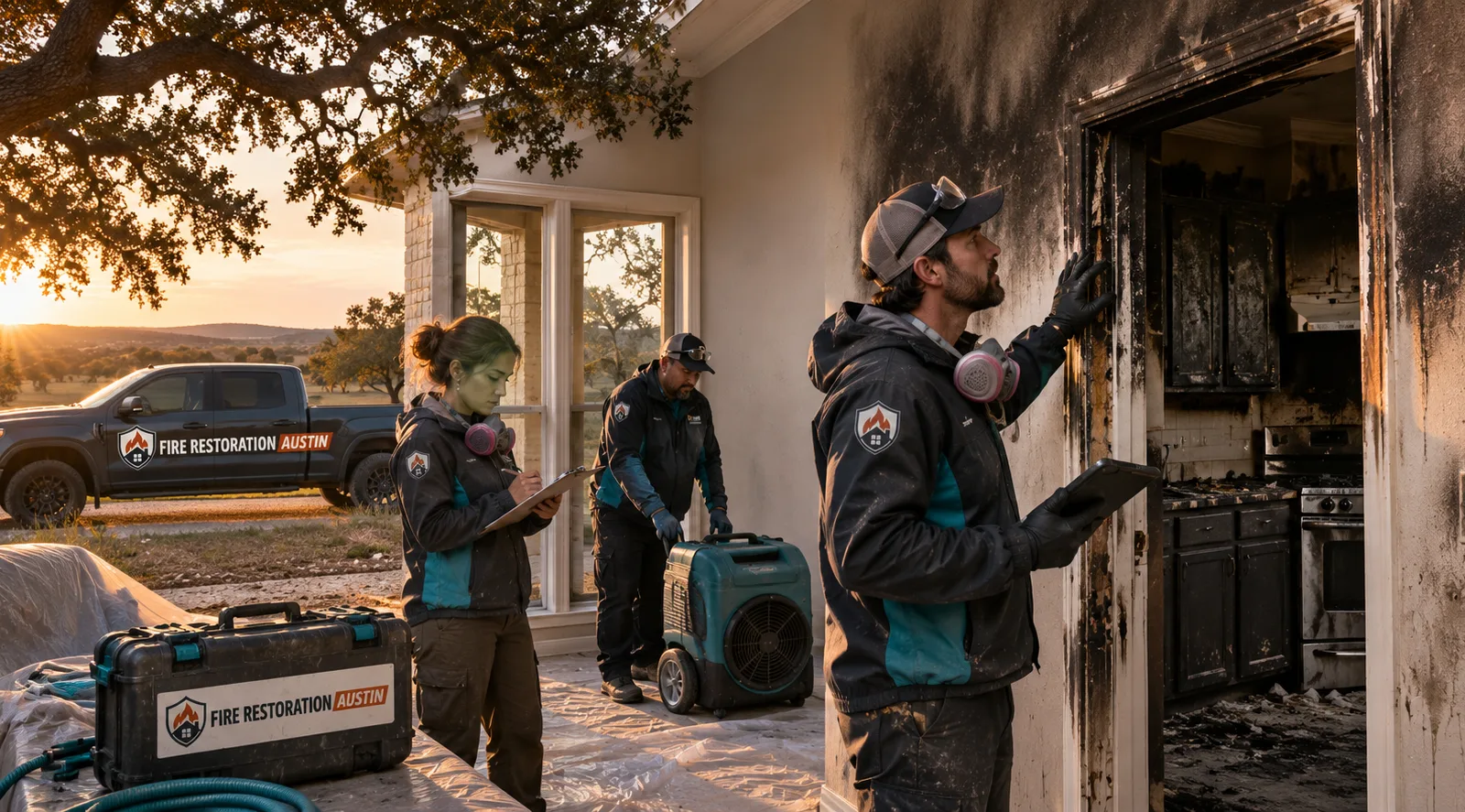
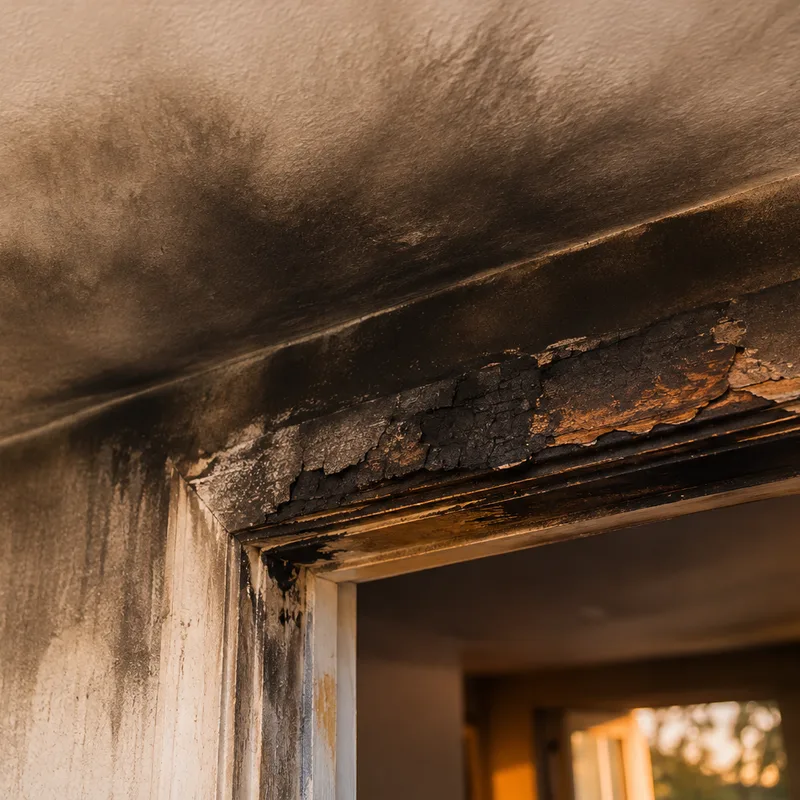
Fire damage restoration in Austin involves more than replacing burned materials. Heat can damage framing and wiring, smoke can travel into adjoining rooms, and firefighting water can soak insulation and flooring. A contractor needs to assess these conditions together before deciding what can be cleaned, what needs drying, and what must be removed.
Stay outside a fire-damaged building until the responding authorities say entry is safe. Sagging ceilings, damaged electrical circuits, and weakened floors can remain hazardous after the flames are out. Avoid switching on the HVAC system or household electrical equipment until the appropriate contractor has checked whether it is safe. Disturbing soot or starting ordinary household fans can spread residue into cleaner areas.
A useful assessment traces the damage beyond the room where the fire started. The contractor checks adjoining wall cavities, attic spaces, penetrations around pipes, and return-air pathways where smoke may have traveled. Moisture readings help identify wet materials that look dry at the surface. The resulting scope should separate salvageable finishes and belongings from porous materials that cannot reasonably be restored.
The cleanup method depends on the residue and the surface. Dry soot may respond to controlled vacuuming and dry-cleaning sponges, while greasy cooking-fire residue needs a different cleaning approach. Scrubbing everything with water can smear soot or set stains. Odor treatment should follow removal of damaged material and thorough cleaning, rather than cover the smell with fragrance.
Through Fire Restoration Austin, one call connects you with one of the local fire damage companies serving Austin to discuss the work directly. The contractor evaluates the property, explains the proposed scope, and provides the quote. You decide whether to proceed.
For properties within Austin city limits, structural alterations and electrical repairs may require permits through Austin Development Services. An Austin mailing address does not always establish the permitting jurisdiction, so ask the contractor to confirm which authority applies to your property before reconstruction begins.
Connect with a contractor who handles fire damage restoration and serves your area. Start with a conversation about assessment, cleanup, and the repairs the property may need.
Ask the person handling the work how they assess smoke migration, hidden moisture, and damaged materials. Discuss access and the proposed scope with that contractor.
The contractor provides the quote and explains the work. You can ask which tasks are included, clarify exclusions, and decide whether the proposed approach fits your situation.
There are no forms to fill. Calling lets you speak directly with a local contractor about fire cleanup and the path toward repairing the property.
Call, enter your ZIP code, and you are connected directly with a local contractor who serves that ZIP. You talk with the contractor and decide what happens next, including arrangements for evaluating the property.
The contractor examines affected materials, smoke spread, water intrusion, and access hazards. Photos and written observations can document conditions before cleanup. Ask for a scope that distinguishes protection, removal, cleaning, drying, contents handling, and reconstruction.
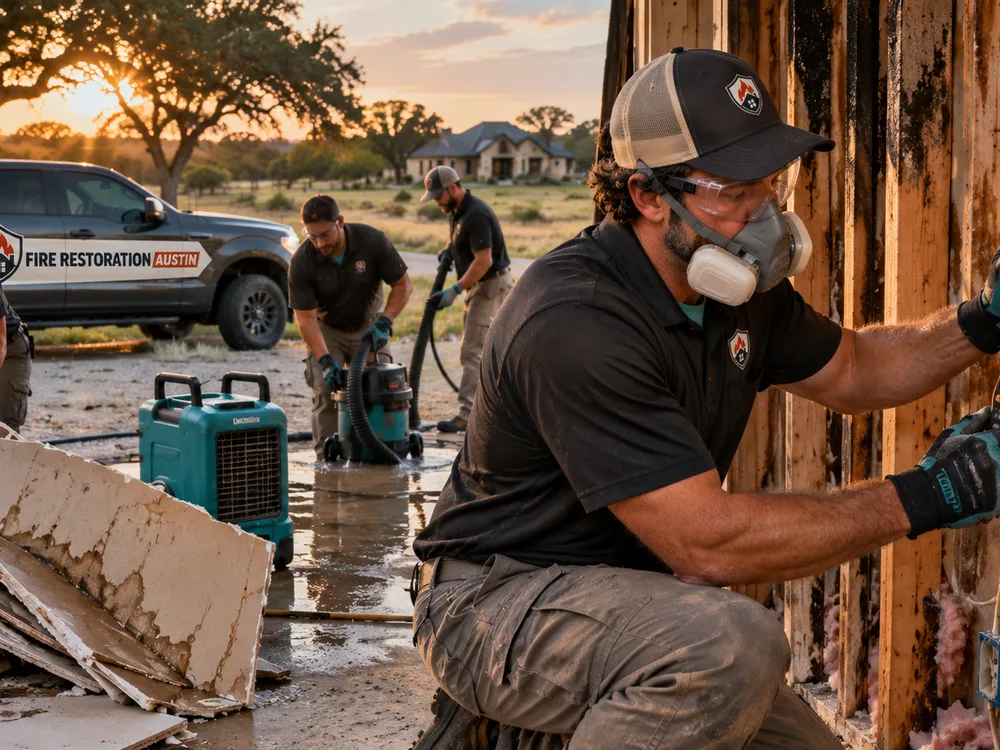
Depending on conditions, work may include securing openings, separating affected rooms, extracting standing water, and removing unsalvageable finishes. Personal belongings need their own assessment. Some items can be cleaned on the property, while others may need specialist treatment or removal.
The contractor selects cleaning methods for each material and residue type. HEPA-filtered equipment can help capture fine particles during appropriate cleanup tasks. Dehumidifiers and controlled air movement address retained moisture, with readings used to track drying rather than relying on appearance alone.
Odor treatment follows source removal and cleaning. Some surfaces may need a suitable sealing system before new finishes are applied. Reconstruction can include insulation, drywall, cabinetry, flooring, and work by the appropriate electrical or mechanical trades. Ask how completion checks and any required inspections will be handled.
Burned finishes, lingering smoke, and wet materials need a coordinated plan. One call connects you with a local fire damage restoration contractor so you can discuss the next step directly.
Occupancy depends on the building's safety, the extent of contamination, and whether living areas can be separated from the work. A functioning bathroom or untouched bedroom does not establish that the house is safe to occupy. Ask the contractor about electrical service, air movement between rooms, access routes, and any restrictions set by responding authorities.
Leave soot-covered surfaces and belongings undisturbed until the contractor recommends a cleaning method. Household cleaners can change residue or damage finishes, and handling belongings can transfer soot onto clean surfaces. Photograph items when safe to do so, and ask how clothing, electronics, documents, and upholstered furniture will be evaluated.
Ask which odor sources will be removed and why a particular treatment is suitable for the remaining materials. Thermal fogging, hydroxyl treatment, and ozone treatment have different applications and safety requirements. Some treatments require people, pets, or plants to leave the treatment area. The contractor should explain preparation, occupancy restrictions, and how the result will be checked.
Ask the contractor what photographs, moisture records, item inventories, and written scope documentation they can provide. Coverage decisions belong to your insurer and depend on your policy. Keep records of communications and confirm any insurer requirements before authorizing disposal of belongings, except where immediate safety measures require action.
The division of work varies, so confirm responsibilities before authorizing the job. Some contractors handle cleanup and repairs, while others coordinate with separate trades or limit their work to restoration tasks. Ask who is responsible for permits, electrical work, contents storage, debris disposal, and the final repair scope.
Older materials may require evaluation before demolition or abrasive cleaning begins. Homes built before 1978 may contain lead-based paint, and some older building products can contain asbestos. Ask the contractor how suspect materials will be identified and whether testing or a separate specialist is needed before those materials are disturbed.
One call connects you with a local contractor for fire damage restoration in Austin, TX. Talk directly about the affected property, ask how the work would be handled, and decide whether to proceed with the contractor.
CALL NOW: +1 877 290 0427