Fire Restoration Austin CALL NOW: +1 877 290 0427

This site connects homeowners with local contractors.

Smoke damage cleanup · Austin, Texas

Austin Smoke Damage Cleanup Company

One call connects you with a local contractor who handles soot removal, smoke residue cleaning, and lingering smoke odors.

CALL NOW: +1 877 290 0427
AustinTexas
Service area
SmokeDamage
Cleanup
LocalContractor
Referrals

This site connects homeowners with local contractors. Independent contractors assess and perform the work.

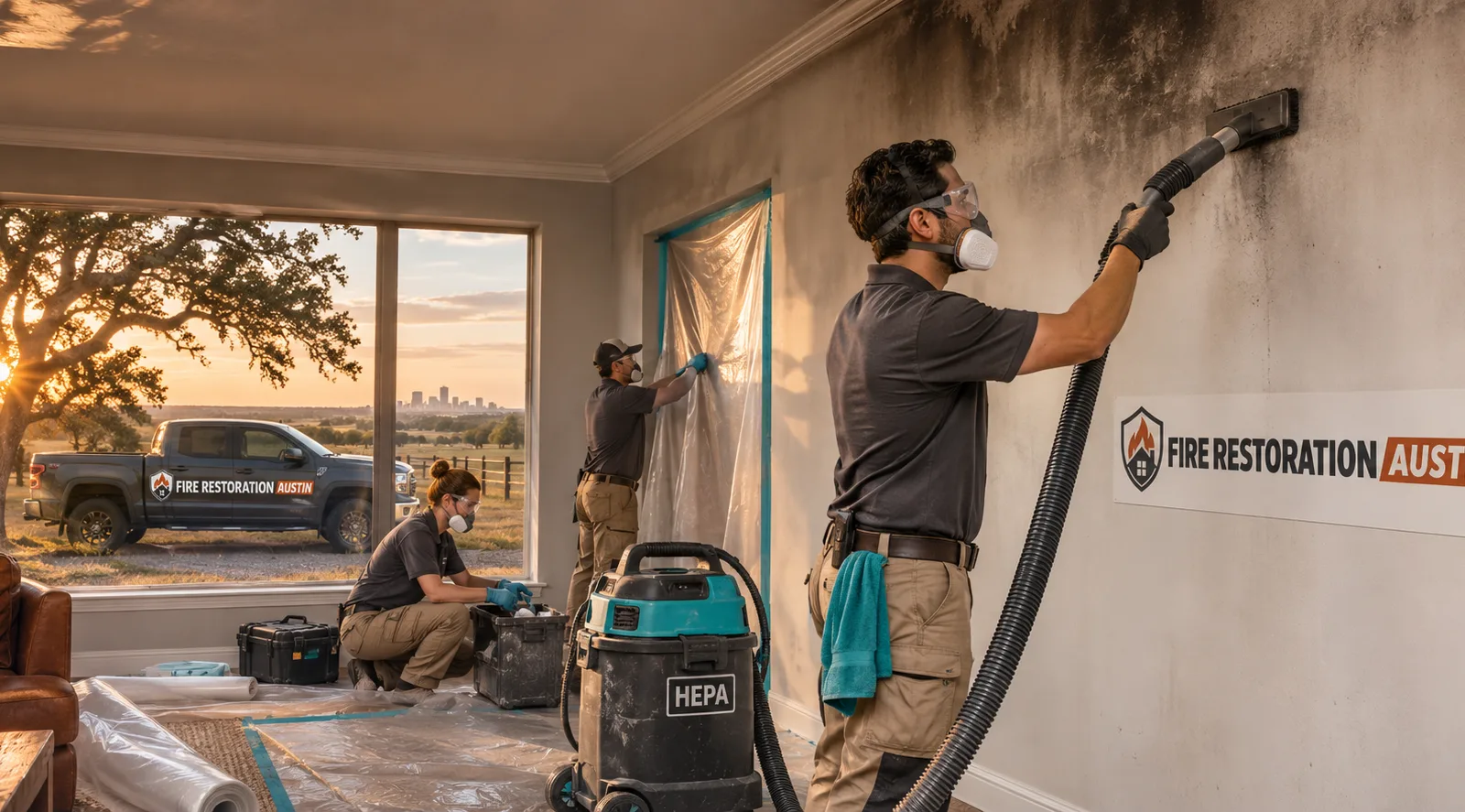
Contractor in protective equipment using a HEPA vacuum on a residential wall with soot staining near the ceiling.

Understanding smoke cleanup

Choosing an Austin Smoke Damage Cleanup Company

Smoke damage cleanup involves removing deposited soot, cleaning affected materials, and treating odor sources. An Austin smoke damage cleanup company should assess both visible staining and the places smoke may have reached, including cabinets, closets, ceiling cavities, and heating or cooling returns. A room can look cleaner while residue remains on porous materials or concealed surfaces.

The source of the smoke matters. A cooking incident can leave sticky, greasy deposits that need a different cleaning approach than loose, dry soot. Burning plastics and other synthetic materials can leave difficult residues and strong odors. The contractor should identify affected materials and test cleaning methods before treating an entire surface. Scrubbing soot with household cleaners can smear it into paint or fabric.

In older Hyde Park homes, original wood trim and plaster can require different treatment than modern painted drywall. In an Austin condominium, shared corridors and ventilation arrangements can affect access and the cleanup boundary. These are reasons to ask for a material-by-material assessment rather than assume every room needs the same treatment.

Fire Restoration Austin connects homeowners with local contractors for this work.

When smoke residue is part of broader damage, fire damage companies throughout Austin, TX can assess how cleanup fits with repairs to affected materials.

You speak with the contractor directly, get the quote from the contractor, and decide whether to proceed.

CALL NOW: +1 877 290 0427

A simpler way to arrange smoke damage cleanup

One call for this job

One call connects you with a local contractor who handles smoke damage cleanup. Instead of continuing through search results, you can discuss soot, affected rooms, and odor concerns directly with the person providing the service.

Local service coverage

The call connects you with a contractor who serves your area of Austin and the surrounding communities. You can discuss property access, whether the home is occupied, and any building-management requirements directly.

A scope you can review

Ask the contractor to distinguish surface cleaning, contents treatment, odor work, and material removal in the written scope. That makes it easier to understand what the proposed work includes and which decisions still need your approval.

You decide what happens next

You talk with the contractor directly and choose whether to proceed after discussing the work and quote. There are no forms to fill. A phone call starts the conversation about getting the affected areas assessed.

CALL NOW: +1 877 290 0427

What smoke damage cleanup in Austin can involve

  1. 01

    Connect and arrange an assessment

    Call, enter your ZIP code, and you are connected with a local contractor who serves that ZIP. The contractor can discuss an assessment and access arrangements. Enter a damaged property only after the appropriate authorities have cleared it for entry; cleanup planning comes after immediate fire, electrical, and structural hazards are addressed.

  2. 02

    Identify residue and affected materials

    The contractor checks the smoke source, residue type, surface condition, and spread into adjoining spaces. Painted walls, unfinished wood, upholstery, insulation, and electronics respond differently to smoke. Cleaning tests help establish which finishes tolerate treatment and which items need specialist attention or replacement.

  3. 03

    Remove soot and clean surfaces

    Depending on the residue, work may begin with HEPA-filtered vacuuming or dry-cleaning sponges before suitable wet cleaning. Greasy deposits may require a compatible cleaning agent. Protecting unaffected rooms and controlling dust movement helps keep disturbed residue within the work area. Soot removal should precede repainting.

  4. 04

    Address contents, air pathways, and odors

    Washable belongings, upholstery, and other porous contents may need separate treatment. The contractor should assess whether smoke entered HVAC components before recommending duct or equipment cleaning. Odor treatment follows source removal and cleaning; masking fragrances do not remove smoke deposits. Any treatment requiring vacancy should come with clear re-entry instructions.

  5. 05

    Review results and remaining repairs

    After cleaning, the contractor checks for remaining residue and odor sources. Some porous materials cannot be restored through cleaning alone. Stained surfaces may need an appropriate sealer and repainting after contamination is removed. Ask for a clear account of what was cleaned, what remains affected, and any proposed follow-on work.

CALL NOW: +1 877 290 0427

Soot on the walls and smoke odor in the furnishings may need different treatments. One call connects you with a local smoke cleanup contractor so you can discuss both parts of the job directly.

CALL NOW: +1 877 290 0427

Surfaces and details that need attention

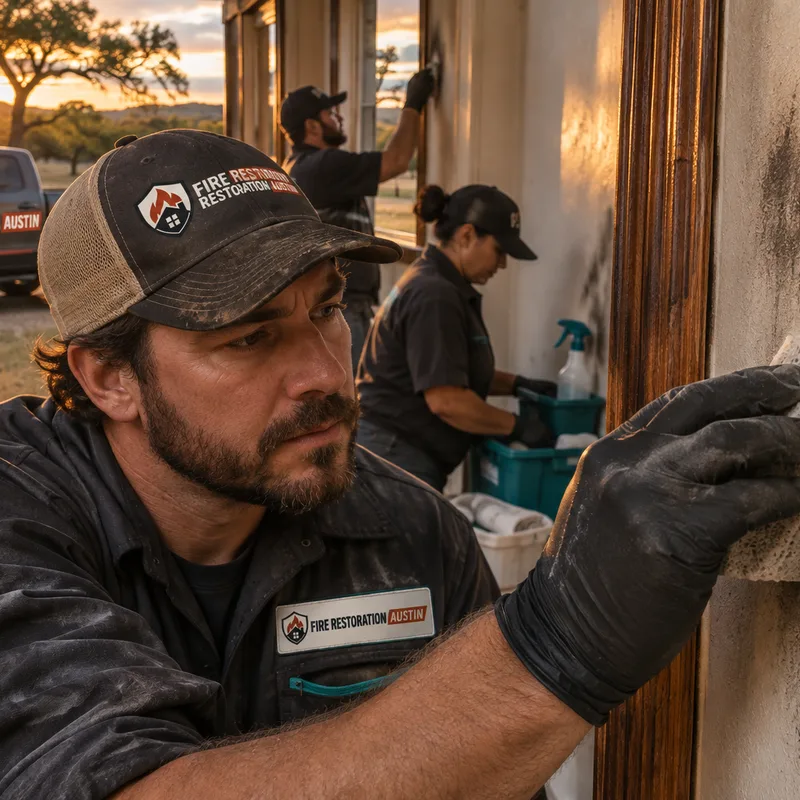
Gloved contractor testing a dry-cleaning sponge on a soot-marked painted wall beside wood trim.
A test area helps establish whether a cleaning method is suitable for the finish.
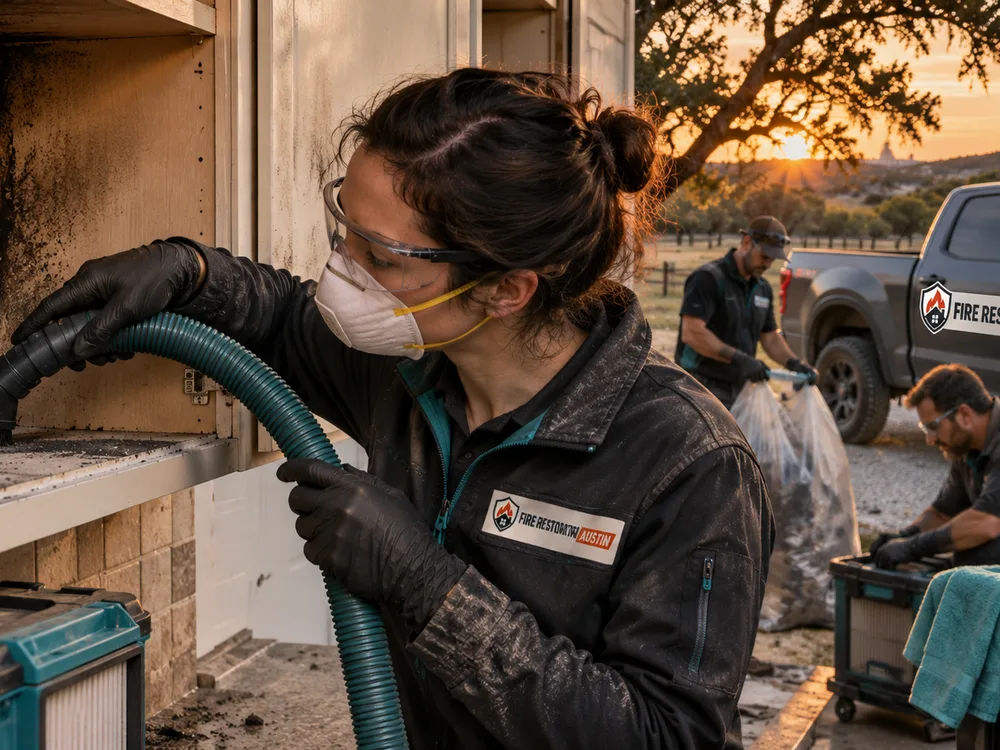
Contractor in protective clothing HEPA-vacuuming smoke residue from the interior edge and corners of an open cabinet.
Cabinet interiors and edges can retain residue even when exposed surfaces look clean.

Questions before arranging smoke damage cleanup in Austin, TX

Can I stay in the house while smoke cleanup is underway?

Occupancy depends on the hazards, work boundaries, and treatment methods the contractor identifies. Dust disturbance, damaged utilities, and certain odor treatments can make temporary vacancy necessary. Ask the contractor which rooms can be occupied, how access will be controlled, and what conditions must be met before returning.

Should belongings be moved out before the contractor assesses them?

Leave smoke-affected belongings undisturbed when it is safe to do so until the contractor provides handling instructions. Moving contaminated items into clean rooms can transfer residue. Photographs and a room-by-room inventory can help document their condition; ask how items will be labeled, protected, transported, and tracked if off-property treatment is proposed.

Does a smoke smell mean everything needs to be replaced?

Smoke odor alone does not establish that every affected item needs replacement. Material porosity, heat exposure, residue penetration, and cleaning-test results all matter. Ask the contractor to explain the basis for each replacement recommendation and whether a trial cleaning is appropriate for belongings you want to keep.

What should I ask about ozone or other odor treatments?

Ask what treatment is proposed, why it suits the affected materials, and what safety precautions it requires. Ozone is a lung irritant and must not be used in occupied spaces. The contractor should explain preparation, treatment boundaries, ventilation, and re-entry requirements rather than treating an odor machine as a substitute for removing residue.

What documentation should I request if insurance is involved?

Ask the contractor for photographs, an itemized work scope, and records of cleaning or disposal decisions. Your insurer determines coverage under your policy. Before authorizing disposal of damaged belongings, confirm the documentation your adjuster needs and keep copies of the contractor's written scope and any approved changes.

How can I judge whether the proposed cleanup scope is complete?

A useful scope identifies affected areas, cleaning methods, contents handling, exclusions, and how completion will be reviewed. Ask how the contractor will handle concealed residue discovered during work and whether additional work requires your approval. Make sure odor concerns and visible soot are both addressed in the written plan.

Get a contractor's assessment of the smoke damage

One call connects you with a local contractor who handles smoke damage cleanup in Austin. Talk directly about the affected surfaces, belongings, and lingering odors, then decide what happens next.

CALL NOW: +1 877 290 0427